125 Pounds in kg: 56.7 kg Exact Answer + Easy Formula
Quick Answer
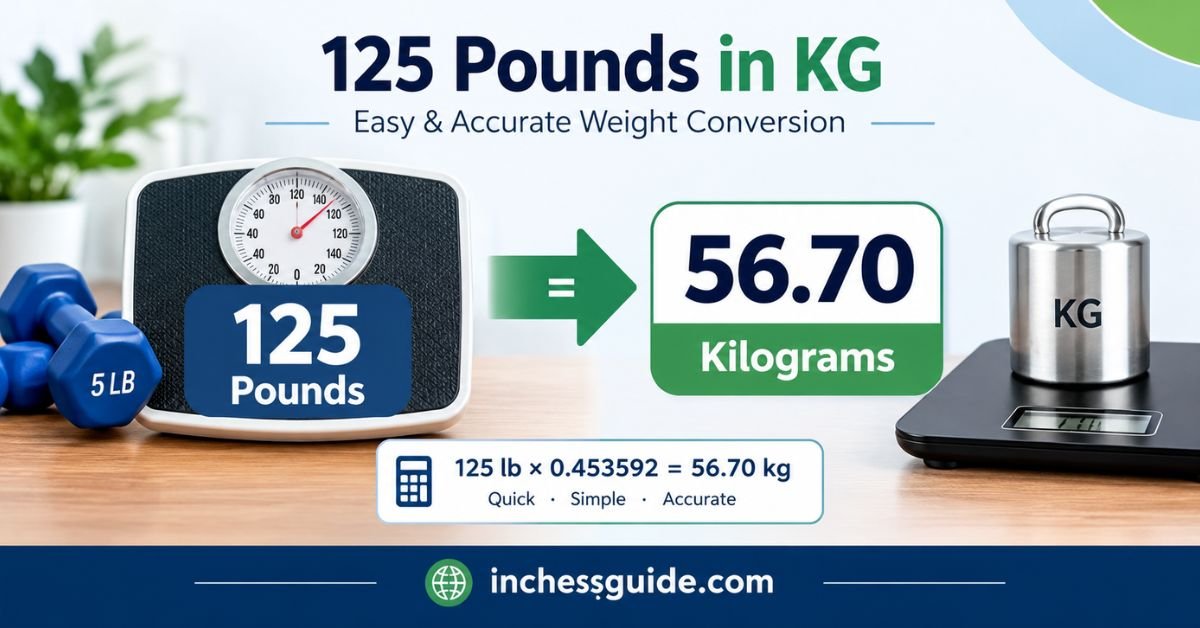
125 pounds (lb) equals 56.699 kilograms (kg), which rounds to 56.7 kg for everyday use.
The exact figure is 56.69904625 kg. It comes from the international definition of the pound: 1 lb = 0.45359237 kg exactly.
| Precision | 125 lb in kg |
|---|---|
| Exact value | 56.69904625 kg |
| Three decimal places | 56.699 kg |
| Two decimal places | 56.70 kg |
| One decimal place | 56.7 kg |
| Nearest whole number | 57 kg |
For body weight, luggage, or general conversation, 56.7 kg is the number to use.
How to Calculate 125 lb in kg
The formula is:
Kilograms = pounds × 0.45359237
Apply it to 125 pounds:
125 × 0.45359237 = 56.69904625 kg
Rounded to one decimal place, that is 56.7 kg.
You can also divide instead of multiplying. One kilogram is about 2.20462262 pounds, so:
Kilograms = pounds ÷ 2.20462262
125 ÷ 2.20462262 ≈ 56.699 kg
Both methods give the same answer. Multiplying by 0.45359237 is cleaner because that factor is exact by definition, whereas 2.20462262 is a rounded reciprocal.
Why the factor is exact
Since the 1959 international agreement between the English-speaking countries, the avoirdupois pound has been defined as exactly 0.45359237 kg. The conversion is therefore not an approximation. Rounding only happens when you decide how many decimal places to display.
Step-by-step version
- Write down the weight in pounds: 125.
- Multiply by 0.45359237.
- Read off the result: 56.69904625 kg.
- Round to suit your purpose: 56.7 kg for most uses, 56.70 kg if a form asks for two decimals.
Mental Math Shortcuts for Pounds to kg
You will not always have a calculator, so here are three shortcuts for 125 lb. Each trades a little accuracy for speed.
| Method | Working | Result | Error vs. 56.699 kg |
|---|---|---|---|
| Halve, then subtract 10% | 125 ÷ 2 = 62.5; 62.5 − 6.25 | 56.25 kg | about 0.45 kg low (0.8%) |
| Divide by 2.2 | 125 ÷ 2.2 | 56.82 kg | about 0.12 kg high (0.2%) |
| Multiply by 0.454 | 125 × 0.454 | 56.75 kg | about 0.05 kg high (0.1%) |
The halve-and-subtract method is the easiest to do in your head and stays within about one percent. Dividing by 2.2 is more accurate and still simple. If the result will go on an official form, use the full factor.
125 Pounds in Other Units
Sometimes the kilogram figure is not the only one you need. Here is 125 lb in several related units:
| Unit | Equivalent of 125 lb | Notes |
|---|---|---|
| Kilograms (kg) | 56.699 kg | Rounded from 56.69904625 |
| Grams (g) | 56,699.05 g | Rounded to two decimals |
| Ounces (oz) | 2,000 oz | Exact, since 1 lb = 16 oz |
| Stone and pounds (st lb) | 8 st 13 lb | 125 ÷ 14 = 8 remainder 13 |
The stone figure matters mostly for readers in the UK and Ireland, where body weight is often given in stone and pounds. Here is the arithmetic: 8 stone is 112 lb, leaving 13 lb, so 125 lb is 8 st 13 lb.
Pounds to kg Conversion Table Around 125 lb
If your number is not exactly 125, this table shows nearby values. All kilogram figures are rounded to two decimal places.
| Pounds (lb) | Kilograms (kg) |
|---|---|
| 100 | 45.36 |
| 110 | 49.90 |
| 115 | 52.16 |
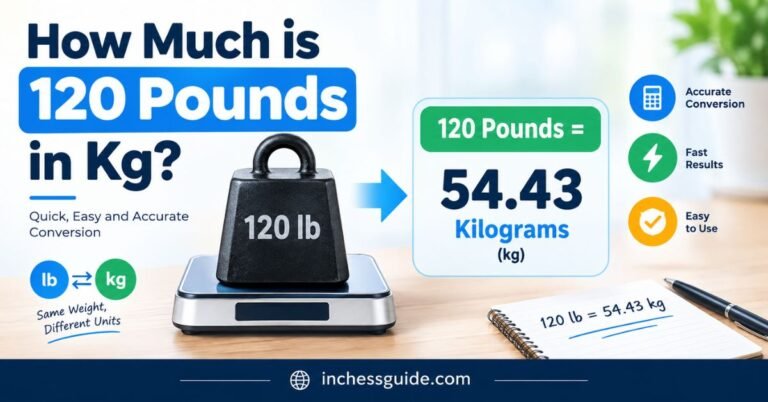
| 120 | 54.43 |
| 125 | 56.70 |
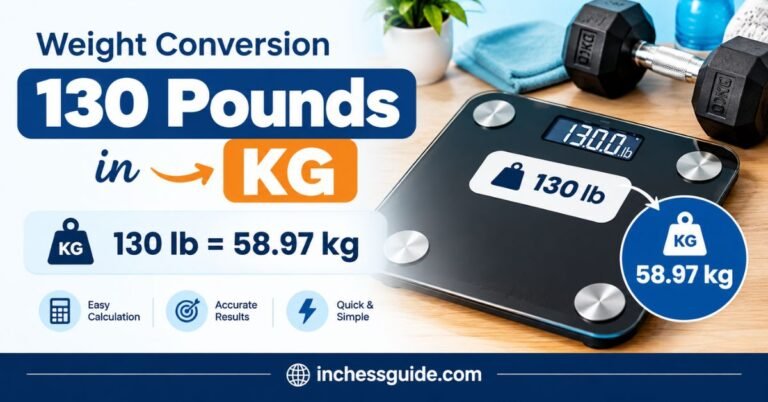
| 130 | 58.97 |
| 135 | 61.23 |
| 140 | 63.50 |
| 150 | 68.04 |
Each 5-pound step adds about 2.27 kg. That gives you a useful quick check: 125 lb is a little more than two 5-lb steps above 115 lb, and the table agrees.
How to Visualize 125 Pounds (56.7 kg)
Numbers are easier to trust when you can picture them. The examples below are approximate, since real objects vary.
Water. One US gallon of water weighs roughly 8.3 lb, so 125 lb of water is about 15 US gallons, or roughly 57 liters. Water’s density changes slightly with temperature, so treat this as an estimate.
A loaded barbell. A standard Olympic barbell in many gyms is marked 45 lb. Add one 25 lb, one 10 lb, and one 5 lb plate to each side and you have 125 lb in total. Note that a 20 kg bar is slightly lighter than a 45 lb bar (20 kg is about 44.09 lb), so a gym that uses kilogram plates will usually land within a kilogram or two of 125 lb rather than exactly on it.
Checked luggage. Many airlines allow about 23 kg in a standard economy checked bag, though limits vary by airline and fare. Two such bags weigh about 46 kg, and 125 lb is a little over two and a half of them, around 57.5 kg. Always check your own airline’s allowance.
Bagged building materials. Concrete mix and similar products are often sold in 50 lb bags in the US, though sizes vary by brand. On that basis, 125 lb is about two and a half bags.
Large dogs. Giant breeds such as Mastiffs and Great Danes can weigh in the region of 125 lb, though individual dogs vary widely. A typical Labrador, by contrast, is usually well below that.
None of these comparisons are exact. They are meant to give you a feel for the size of the number, not a measurement.
When Converting 125 lb to kg Matters
Fitness and body weight. The US commonly uses pounds, while most other countries use kilograms. If you track weight or follow a program written in the other unit, converting accurately keeps your numbers comparable over time. For tracking, pick one unit and stay with it, since converting back and forth introduces small rounding differences.
Travel and shipping. Luggage and freight limits are often quoted in kilograms. A parcel weighing 125 lb is 56.7 kg, which may put it in a different shipping class than you expect. Round up, not down, when you are near a limit.
Medical and forms. Weight-based calculations in healthcare commonly use kilograms. If a clinician or pharmacist needs your weight in kg, 56.7 kg is the right figure to give. Never work out a medication dose from a rounded conversion yourself. Doses should come from a qualified professional using a properly measured weight.
Recipes, crafts, and DIY. Bulk ingredients and materials are sometimes listed in pounds in one country and kilograms in another. The same formula applies.
Mass vs. Weight: A Brief Clarification
In everyday language, “weight” and “mass” are used interchangeably. Strictly speaking, mass is the amount of matter in an object, measured in kilograms or pounds-mass. Weight is the force gravity exerts on that mass, measured in newtons or pounds-force.
When people say “125 pounds” in daily life, they almost always mean mass, and the conversion to 56.7 kg is the correct one. Only in engineering or physics contexts does the distinction change the calculation. Converting pounds-force to newtons uses a different factor, so do not apply the 0.45359237 factor to a force.
5 Common Mistakes When Converting 125 lb to kg
Multiplying by 2.2 instead of dividing. Going from pounds to kilograms makes the number smaller. If your answer is larger than 125, you used the wrong operation. Multiplying 125 by 2.2 gives 275, which is the answer to a different question: how many pounds is 125 kg.
Rounding the factor too early. Using 0.45 instead of 0.4536 gives 56.25 kg, almost half a kilogram low. That gap matters for shipping limits or precise records.
Mixing up pounds and stone. Someone who says they weigh “nine stone” is not at 9 lb. Check which unit is being used before converting.
Confusing pound-mass and pound-force. As noted above, the factor in this article applies to mass.
Treating a rounded result as exact. Writing 56.7 kg is perfectly fine, but it is a rounded value. The exact result has more digits.
Accuracy and Rounding: How Many Decimals Do You Need?
The right level of precision depends on the job.
- Casual conversation: 57 kg, or “about 57 kilos.”
- Fitness tracking and body weight: 56.7 kg. Home scales typically display one decimal place.
- Shipping and travel: 56.7 kg, rounded up if you are close to a limit.
- Scientific or technical work: 56.699 kg or more digits, depending on the instrument’s precision.
A displayed conversion cannot be more precise than the original measurement. If your scale reads 125 lb to the nearest pound, the real weight could be anywhere between about 124.5 and 125.5 lb, which is roughly 56.47 to 56.92 kg. Reporting 56.69904625 kg would imply a precision the measurement never had.
When accuracy matters, weigh the item on a calibrated scale in the unit you need, rather than converting an estimate.
Converting kg Back to Pounds
To check the result, reverse the calculation:
Pounds = kilograms × 2.20462262
56.7 × 2.20462262 ≈ 125.0 lb
The result lands on 125 lb, which confirms the conversion. Small differences in the last decimal come from rounding 56.699 to 56.7.
Frequently Asked Questions
1: How many kilograms is 125 pounds?
125 pounds is 56.699 kg, usually rounded to 56.7 kg.
2: Is 125 lb closer to 56 kg or 57 kg?
It is closer to 57 kg. The exact value is 56.699 kg, which is 0.301 above 56 and 0.301 below 57 only when rounded loosely, but rounded to the nearest whole number it becomes 57 kg because 0.699 is greater than 0.5.
3: What is the quickest way to estimate pounds to kg?
Divide by 2.2. For 125 lb that gives 56.82 kg, which is within about 0.12 kg of the exact answer. Halving and subtracting 10% is faster but slightly less accurate.
4: Why does the conversion give a long decimal?
Because the pound is defined as exactly 0.45359237 kg, multiplying by 125 produces 56.69904625 kg. The long decimal is exact, but you only need to keep as many digits as your purpose requires.
5: Is 125 lb the same in kg everywhere?
Yes. The international pound is defined identically worldwide, so 125 lb is always 56.699 kg. Older or regional pound definitions existed historically, but modern conversions use the international standard.
6: Can I use this conversion for medication dosing?
You can use it to tell a clinician your weight in kilograms, but dosing should always be calculated by a qualified professional based on a measured weight, not from a rounded conversion.
Explore More Continue Reading Our Guide on: How Much Is 120 Pounds in Kg?
Conclusion
125 pounds equals 56.699 kg, which most people round to 56.7 kg. To convert any weight yourself, multiply the pounds by 0.45359237, or divide by 2.2 for a quick estimate that stays within about a quarter of a percent. Keep extra decimals only when the situation calls for precision.